What Home Care Caregivers Have to Do to Keep Their Benefits
Under five minutes, once. Then one qualifying wellness activity a month, which the plan's own member guide describes as personalized health material arriving by text and email, with a chance to make it up the following month if one gets missed. A caregiver activates a dashboard, completes a health risk assessment, adds her household, and keeps answering. No premium, and no paperwork for you.
Ask for the member guide before you ask for a proposal
Page five of the UnifyWell member guide carries a heading that reads Plan Requirement, read carefully, and the four lines under it are the entire obligation a caregiver takes on. Read it yourself.
Here is why that page matters more at a home care agency than it would anywhere else. In 2024, 90.3 percent of adults had a source of usual health care, a usual place to go when they are sick, per the CDC's April 2026 data brief, but among adults aged 18 to 34 that figure is 83.7 percent. Eleven percent of home care workers carry no health insurance and 48 percent sit on public coverage, mostly Medicaid, per PHI's 2025 key facts report. Someone with no usual place of care has no habit of opening a health text.
So what does a caregiver actually have to do?
Four things, and only the last one repeats. The first three happen in the first week, walked through by the administrator during the thirty-day window the plan uses to communicate benefits to your staff. Then it is one activity a month.
| What she does | How often | What it involves |
|---|---|---|
| Activate the dashboard | Once | First-time login, email address, password |
| Health risk assessment | Once | Under five minutes, per the member guide |
| Add family information | Once | Household members get the same access |
| One wellness activity | Monthly | Material by text and email, make-up month if missed |
Nothing on that list costs money, which is the part owners keep expecting to find. Even a caregiver who does have coverage pays cash under a deductible that averages $1,955 for single coverage and $2,624 at smaller firms, per KFF's 2026 employer survey. Usage follows the pharmacy counter first, not the dashboard.
What that looks like in one household
Alina works three or four days a week, with two kids in school. She logged in during her first week, did the assessment on her phone in the parking lot between visits, and the monthly activity is a text she answers on a break. What she noticed was not the dashboard. It was the two cleanings and the X-rays her family finally booked, at up to 60 percent off what the office quoted in cash, on a dental network that is direct-pay.
Composite example, not an actual member.
My caregivers are part-time. Does the requirement reach them?
Hours are not the gate. The thirty-hour line is a group health carrier's eligibility rule and not tax law, so a Section 125 election is open to W-2 employees whatever their schedule, and the monthly activity does not change with her hours. Forty-six percent of home care workers work fewer than 35 hours a week. A group plan was never going to fit that roster.
Wages decide it instead. What a caregiver nets depends on her pay rate and what already comes out of the check. The part-time options sit side by side here.
The plan carries a CPA opinion from CBIZ and a legal assurance letter from HitesmanLaw. Our compliance page lists both, and the legitimacy question is the one to read before any vendor call.
We already priced benefits and it did not work
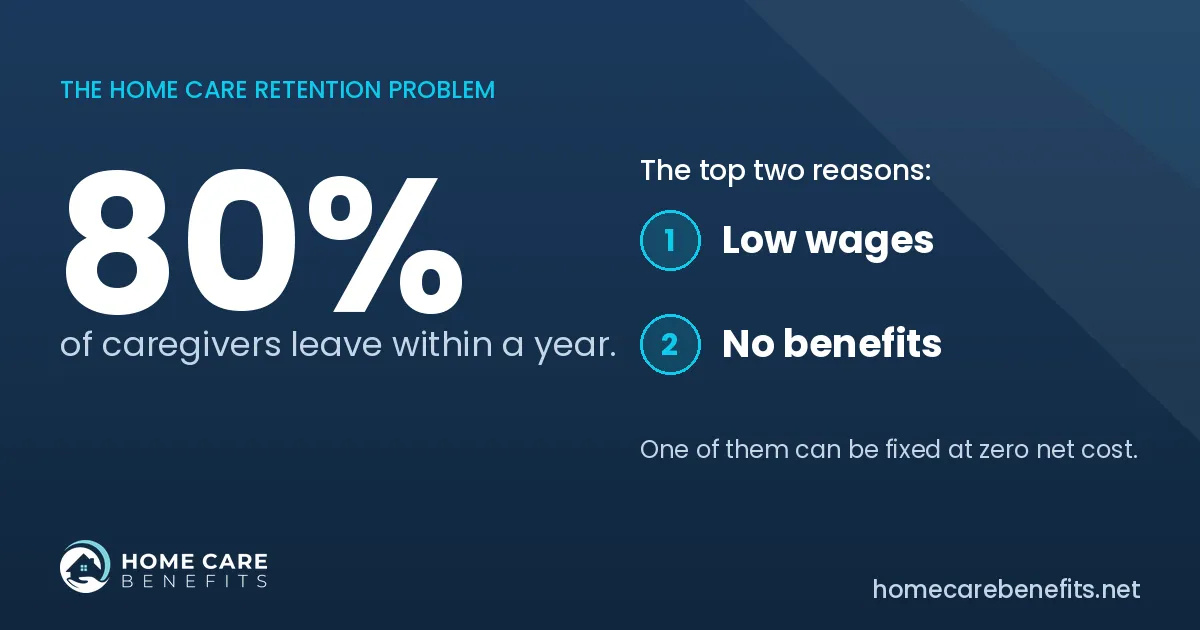
You priced a raise and a group plan. Both need money the business does not have, and on a 7 to 10 percent net margin the spreadsheet closes itself before you finish typing the second column. Here is the raise.
A Section 125 wellness plan asks for none of that. It redirects employer payroll tax the agency already sends to the Treasury, which puts net employer cost near zero. The monthly activity is what the caregiver contributes instead of a premium.
Where this stops
The requirement is real. A caregiver who ignores every message for months is not holding up her end, and the make-up month is a grace period rather than a permanent exemption. A benefit nobody activates is not a benefit. This is also not insurance, so a caregiver facing a hospital admission is as exposed as she was before, and 28 percent of adults say they skipped or postponed needed care over cost, per KFF.
What would this look like at your agency?
Two inputs answer it: how many caregivers, and what they earn. That is the whole ask, and it stays small on purpose. The estimator takes those two numbers and shows what you pay in employer payroll tax now, what turnover at the industry median costs you, and what could be redirected into caregiver benefits instead. Thirty seconds, no signup.
Across Home Care Benefits' own proposals the employer figure has landed between $300 and $900 per participating employee per year. That is a range and not a quote. Which of your caregivers qualify, and what shows up on their checks, only your own numbers answer. Have your CPA read the plan documents. Nothing to send us, nothing to upload.
Home Care Benefits is not a law firm, an accounting firm, or an insurance company, and provides marketing and enrollment support rather than legal, tax, accounting or health advice. The Unify Wellness Plan is administered by UnifyWell and ACA Solutions. The plan is not health insurance. Savings figures in any proposal are estimates based on the information provided and are not guaranteed. Federal and state tax laws change. Consult your own CPA or attorney before enrolling.